The best home battery brands in Australia.
How much backup do you actually need?
Size to your evening use, not the biggest number on the brochure. Then check how long the warranty really lasts, how far it expands and how it copes with heat.
34 ranges from 9 brands, scored from manufacturer datasheets. Data checked 16 September 2026.
Top home battery brands
Rated on their best home batteries, what owners say in reviews, track record and recalls, what Australian installers choose, and local support. Same rules for every brand.
 8.7
#1Sigenergy
SigenStor all-in-one battery stack
Australian office4.9(1,788)1 recall on other products1 seriesProducts 10.0Reviews 9.4Track record 2.6Installers & market 10.0Support 9.0
Best series: SigenStor BAT 10.0
 8.3
#2Sungrow
SBR battery
Australian office4.9(1,091)No ACCC recalls2 seriesProducts 7.2Reviews 9.4Track record 10.0Installers & market 8.0Support 9.0
Best series: SBH 7.8
 8.2
#3SolaX
T-BAT HS and T-HS systems
Australian office4.9(167)1 recall on other products3 seriesProducts 9.6Reviews 8.8Track record 8.0Installers & market 3.0Support 9.0
Best series: T-HS51 system 9.7
Every home battery brand, rated
Pick a brand for its pros and cons, every series it sells, how we rate each one and the datasheets. Got a quote? Search the model code instead.
- SigenergyAustralian office4.9(1,788)1 recall on other products1 seriesBest seriesSigenStor BAT8.7
- SungrowAustralian office4.9(1,091)No ACCC recalls2 seriesBest seriesSBH8.3
- SolaXAustralian office4.9(167)1 recall on other products3 seriesBest seriesT-HS51 system8.2
 TeslaAustralian office4.9(389)1 recall on other products2 seriesBest seriesPowerwall 38.1
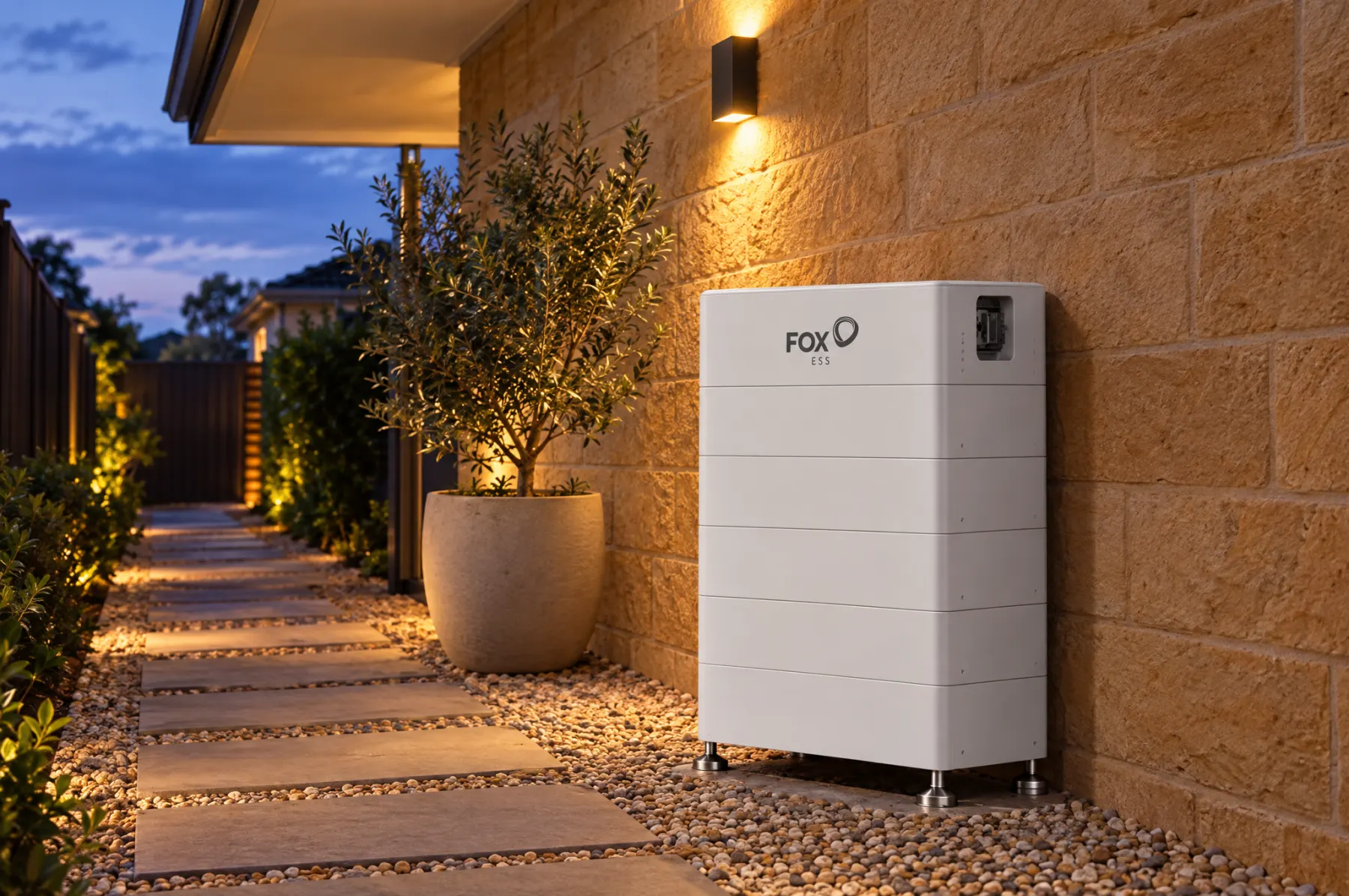
 Fox ESSAustralian office4.7(309)No ACCC recalls6 seriesBest seriesCQ7.7
 GoodWeAustralian office4.9(623)No ACCC recalls5 seriesBest seriesLynx F G27.5
 Alpha ESSAustralian office4.6(675)No ACCC recalls4 seriesBest seriesSMILE-G3-BAT7.4
 SofarAustralian office4.2(21)No ACCC recalls2 seriesBest seriesBTS E-DS56.8
 PotisEdgeNo Australian officeNo ACCC recalls3 seriesBest seriesALOE4.1
Brand ratings combine datasheet scores for series on the Clean Energy Council approved lists (checked 16 September 2026) with SolarQuotes owner reviews, the SolarQuotes installer vote, SunWiz installation data, Australian support and ACCC recalls (checked 6 October 2026). Nobody can pay for a rating.
How to choose home batteries.
What size do I need?
Add up what you use from sunset to sunrise. Most homes need 8 to 16 kWh to cover that, more with an EV or electric heating.
Then check your solar can fill it: a battery your panels can't charge is money on the wall.
Power matters as much as capacity
Capacity (kWh) is how long it lasts. Power (kW) is how much it can run at once. A big battery with low power can't run the oven, air con and kettle together.
For whole-home backup, look for 8 kW or more continuous, and check whether the figure is per module or for the whole system.
DC or AC coupled?
DC-coupled batteries share a hybrid inverter with your panels: cheaper and more efficient.
AC-coupled batteries bring their own inverter, so they bolt onto an existing system without replacing anything.
The warranty fine print
Most warranties run 10 years and promise 70% of capacity at the end, but also cap the total energy that can pass through. Cycle the battery hard and some caps run out before 10 years.
We read each brand's Australian warranty document and show how many years it covers for a typical home, about 300 full cycles a year. Ask for the warranty document with your quote.
Rebates on home batteries.
Cheaper Home Batteries Program
Every state
A federal discount applied at purchase, worth about $258 per usable kWh on the first 14 kWh when we last checked, with smaller rates above that. The battery must be VPP-capable and installed by an accredited installer. The rate steps down every six months.
State battery programs
NSW, VIC, WA and others
Some states add VPP incentives, loans or rebates on top. Eligibility changes often, so check the date on any figure you're quoted.
How we score home batteries
Each datasheet value maps to 0 to 10 with the rule below. Your postcode and goals then adjust the weights.
- Warranty that lastsBattery warranties end at 10 years or when a set amount of energy has passed through, whichever comes first. This is how many years the warranty covers for a typical home, which cycles its battery about 300 times a year.Years of performance warranty at 300 full cycles a year, from the manufacturer's Australian warranty document: 6 years scores 0, the full 10 years or more scores 10.30%
- Weather sealingOutdoor-rated batteries can go on any wall, including in the weather.IP66 or better scores 10, IP65 9, IP55 6, IP54 4, lower 0.25%
- Room to growStart with what you need and add modules later, for an EV or electric heating.Largest approved configuration, usable kWh: 10 scores 0, 40 or more scores 10.25%
- Heat toleranceBatteries in garages and on west walls get hot. Higher operating limits mean less throttling.Highest operating temperature: 40°C scores 0, 55°C or more scores 10.20%
Gates first
A series must pass these before it's listed at all.
- Currently on the Clean Energy Council approved batteries list
- Manufacturer datasheet on file for the series
Not in the score
- Cycle life printed on datasheets. It's a lab test the maker isn't held to, and many brands don't print it; we score the warranted throughput instead
- Depth of discharge, because usable capacity (what you're sold) already allows for it
- Price and the federal rebate, which change every six months
- Continuous power, because datasheets quote it per module or per system inconsistently. We show it, but don't score it yet.
- Round-trip efficiency, which brands measure in different ways
No manufacturer or installer can pay for a score. Read the full method
Questions about home batteries.
Are batteries worth it in 2026?
For homes with solar and a solid evening load, yes. The federal rebate has shortened paybacks a lot. If you're out all day and use little at night, solar alone may still be the better buy.
Do I need to join a VPP?
The battery must be able to join a virtual power plant to get the federal rebate, but joining is your choice. Some VPPs pay well; others limit how you use your own battery.
Will a battery work in a blackout?
Only if the system has backup capability. Check whether it covers the whole home or essential circuits, and how fast it switches over.

See your home's score in two minutes.
Free, independent and no obligation. Up to three vetted installers quote on your bundle.